
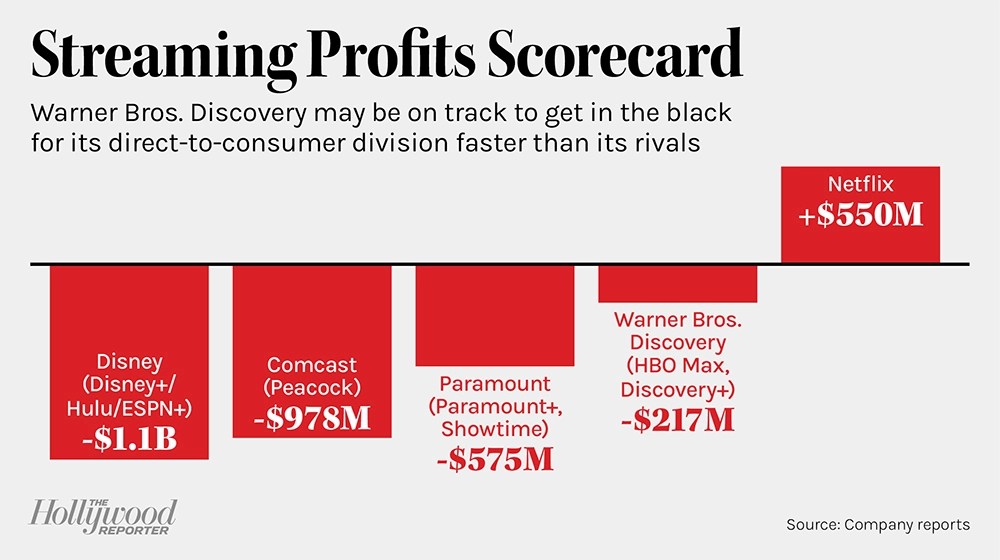
Source: Company Reports
Originally published from the The Hollywood Reporter.
As streaming platforms race to catch up to Netflix, is it too early to focus solely on profitability? Licensing legacy content across competing platforms is becoming an increasingly essential strategy in the streaming world. This trend mirrors the long-standing practice of TV production companies licensing their content to other media conglomerates, raising questions about whether profitability should be the primary focus at this stage.
Earlier this month, Warner Brothers Discovery made noise with a potential stand-alone streaming service combining the likes of HBO Max and Discovery+. They promised that the platform would have an improved interface and more efficient operations. Now, while this sort of product is still in development, David Zaslav has announced that Discovery+ will remain as a stand-alone streaming service after the combined offering with Warner Brother’s Discovery launches later this spring.
They call their strategy “no sub left behind,” but I wonder how they will sustain this approach in the long run. With continued price hikes across their various products and exclusive offerings, such as placing WestWorld on Roku and Tubi, I can’t help but speculate whether they have a different objective in mind.
In the world of streaming, price hikes are no new phenomenon– just look at Netflix for instance. Last month, we even witnessed HBO Max undergo their first raise in price of one dollar (in two years since they began!). As Warner Brothers Discovery continues to make significant moves by combining services and distributing their content across various streaming entities, it’s worth noting that these changes are happening alongside price increases. You might think that raising prices by a dollar isn’t a big deal, but Warner Brothers Discovery is quickly placing their content on streamers outside their own platforms. It feels like they are intentionally spreading our attention across different services. When I reconsider the “no sub left behind” model, I worry that it may simply be a pretext for continuously raising fees across as many platforms as possible.
An element of Zaslav’s strategy is relicensing the Warner library– like the deal they struck with Amazon’s Rings of Power. Zaslav describes this strategic move as a “a nonexclusive window [and] we look at it as what we are giving up versus what additional revenue we are generating”(The Hollywood Reporter). Considering that Rings of Power is the most expensive show ever made, I don’t blame Zaslav for wanting to participate in deals such as these. Considering that Rings of Power is the most expensive show ever made, I can’t fault Zaslav for wanting to participate in deals like these. However, from a consumer perspective, it feels like a strange game where Warner Brothers Discovery is attempting to get subscribers from other platforms to fall in love with their content library. While I can see the strategic advantage in that, it also seems like they’re fueling the frustration many subscribers already feel about needing multiple subscriptions. In their effort to gain more subscribers, they might actually be alienating their own base. This move to license intellectual property to other streamers also echoes how TV production studios distribute their shows to other networks. Could this be a new industry norm for platforms to quickly generate revenue by re-licensing existing franchises?
But when taking stock of the streaming giants in their chase for Netflix-like subscribers and margins, WBD appears to have put itself in pole position. While the combined service will bring with it some investment (JPMorgan’s Phil Cusick estimates the company will pour $400 million into the launch through both marketing and tech), the dramatic cost-cutting, price-raising and new launch put it in a place where it may be the first of the legacy streamers to forge a path to profitability. Whether it’s good enough to replace the ATM machine that is the cable TV bundle is a whole other story.
Alex Werprin; The Hollywood Reporter
The comparison at the end, questioning whether these choices are strong enough to replace the traditional cable TV bundle, is intriguing. It feels as though streaming platforms are increasingly resembling the older cable TV models.
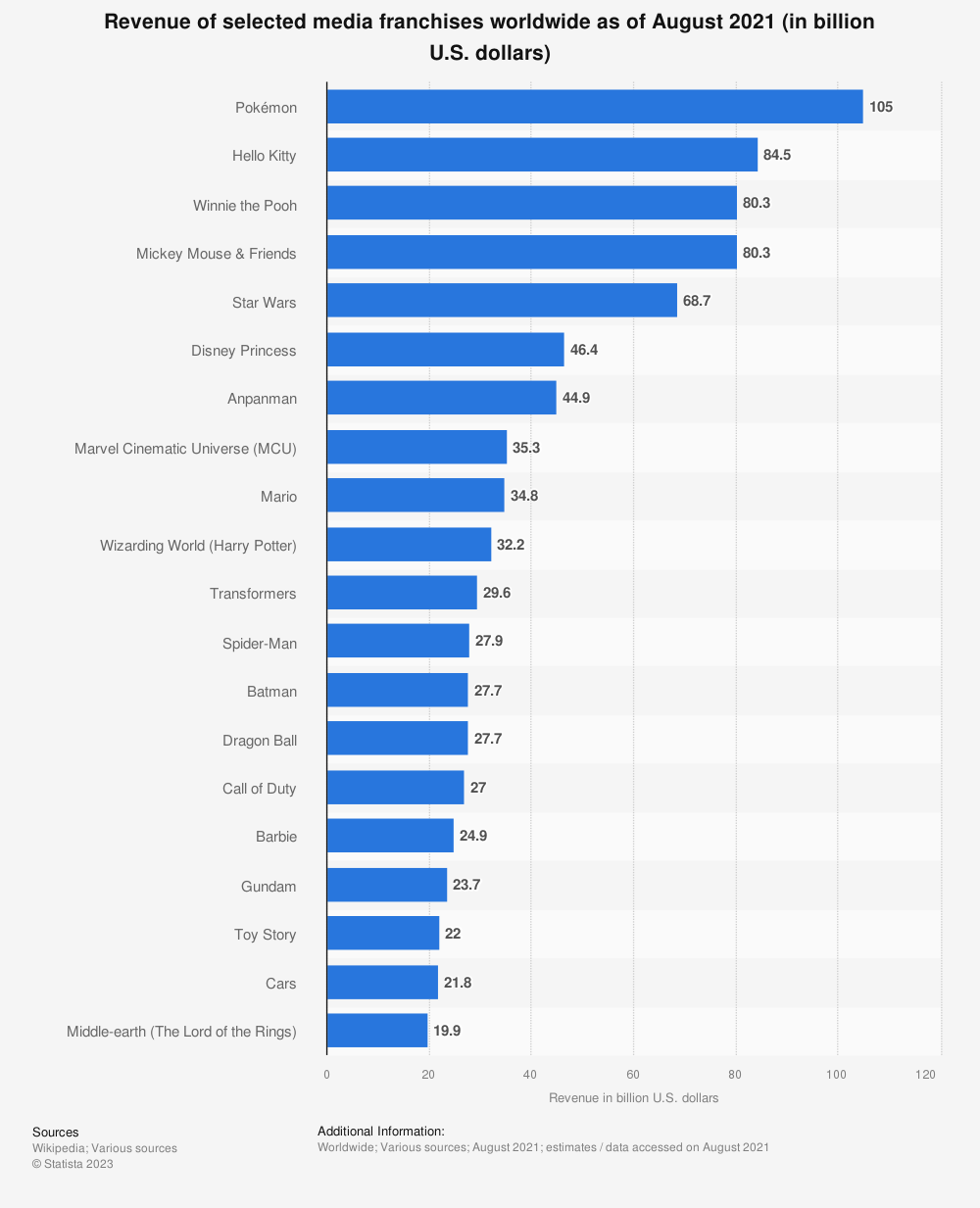
There haven’t been any reports detailing how much streamers make from licensing their legacy content or franchises. To help track how relicensing legacy content to other platforms evolves, I’ve attached a 2021 Statista Report that highlights the revenue associated with the world’s leading franchises.
While content seems to be the main focus of Warner Brothers Discovery, I hope to see more innovation in terms of technology and connectivity among subscribers. If Zaslav claims that no other content library rivals the rich narratives offered by Warner Brothers Discovery, then I expect a platform that technologically reflects that quality. We’ve already seen “Channels” on Amazon Fire TV, Apple TV, and Hulu, but what we need is a bold step forward—something that goes beyond simply mimicking the old cable TV model.
 ROGER IRWIN