

Image Source: COLLIDER
Pictured Turning Red and Encanto
According to a recent report from Variety, The Writers Guild of America is set to begin a strike authorization on April 11th. If the strike is passed, then the strike will officially begin on May 1st (when the current contract period ends). These talks have been ongoing since March 1st with Hollywood’s largest employers. The window of online-voting will be open to WGA members from April 11th through April 17th.
With this impending timeline, I can’t help but wonder how streamers and other media conglomerates are bracing for the storm of a potential strike. It seems as though these unfair business practices have been in place for the past ten years and that it is absolutely necessary for better compensation and working conditions.
Recently, I came across an article from IndieWire announcing the latest UCLA Hollywood Diversity Report. In the first time in its 10 year history (surprisingly the same timeline as tensions building up to the WGA strike) the report has expanded to now include statistics relating to streaming. This could be largely due to the fact that the report’s main leadership sponsors are Netflix and the Hollywood Foreign Press Association, with The Walt Disney Company and Hulu serving as annual sponsors.
Since Netflix and Disney are undoubtedly connected to the working conditions that writers experience, I can’t help but wonder if the statistics in this report will be used for on-going negotiations between the WGA and corporations.
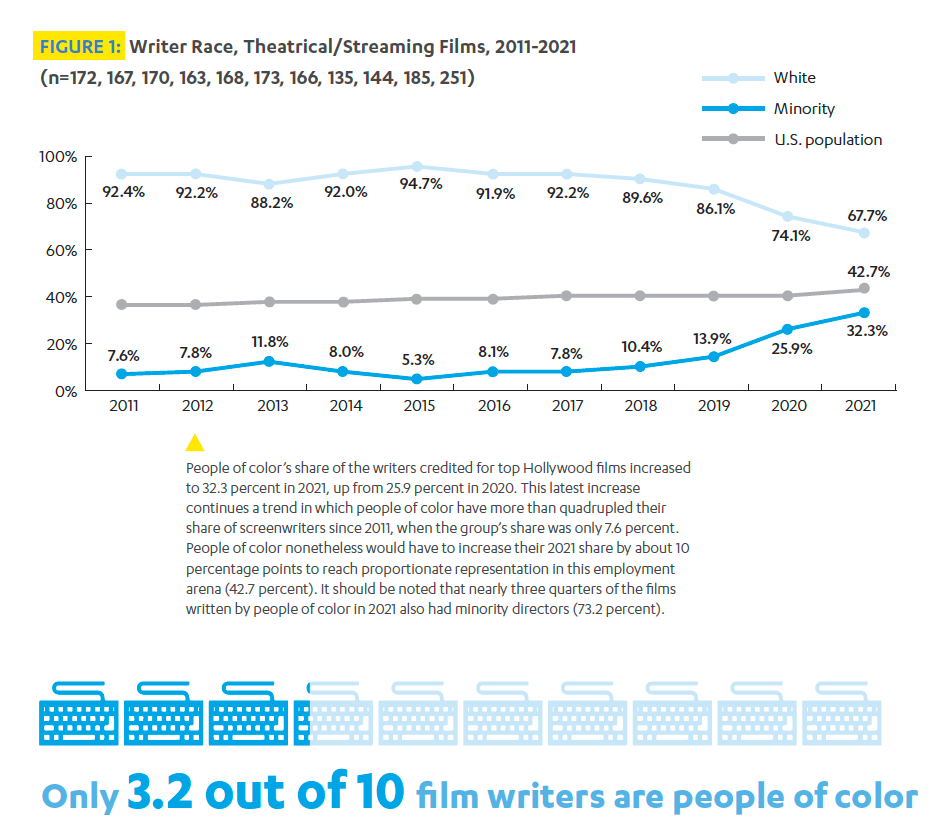
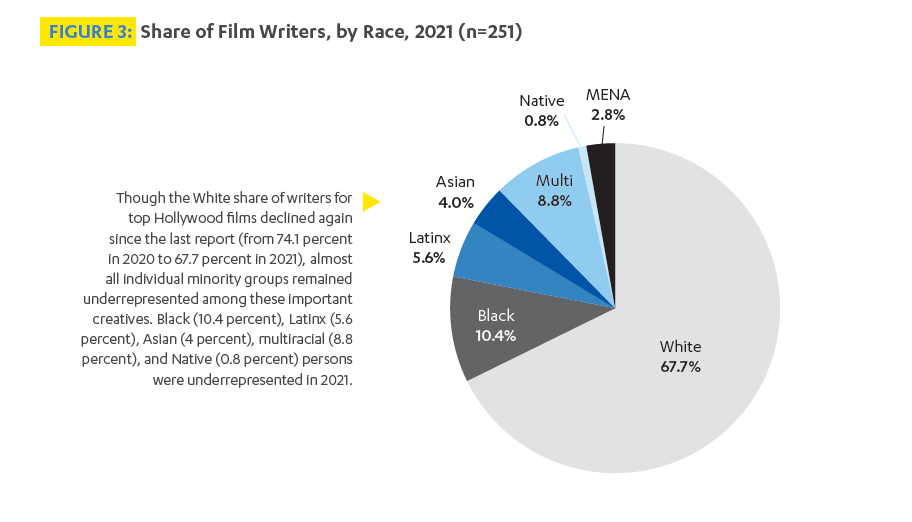
It was fascinating to learn that streaming releases are more diverse than theatrical releases (64% of streaming casts had more than 30% diversity versus theatrical films which had 57% diverse casts). This finding demonstrates the social responsibility and consumer need of streamers to provide diverse narratives for its audiences. For instance, the two most watched streaming releases of 2022 were Turning Red and Encanto. An indicator of having a diverse cast is also dependent on prioritizing the voice of female writers and writers of color. Below are two statistics from the report that stood out to me in relation to how these diversity demographics play a role for writers:
Word Count: 348
 ROGER IRWIN